Aeron Reviews Films
  • All
  • Alphabetically
  • By Genre
  • Lists
  • Contact
  • Details
    • Ratings
    • Warnings

The Green Book

4/2/2019

0 Comments

 
Picture

Genre: Drama, Historical, Biopic
Rating: 12A
Warnings: Racism, Mild Violence

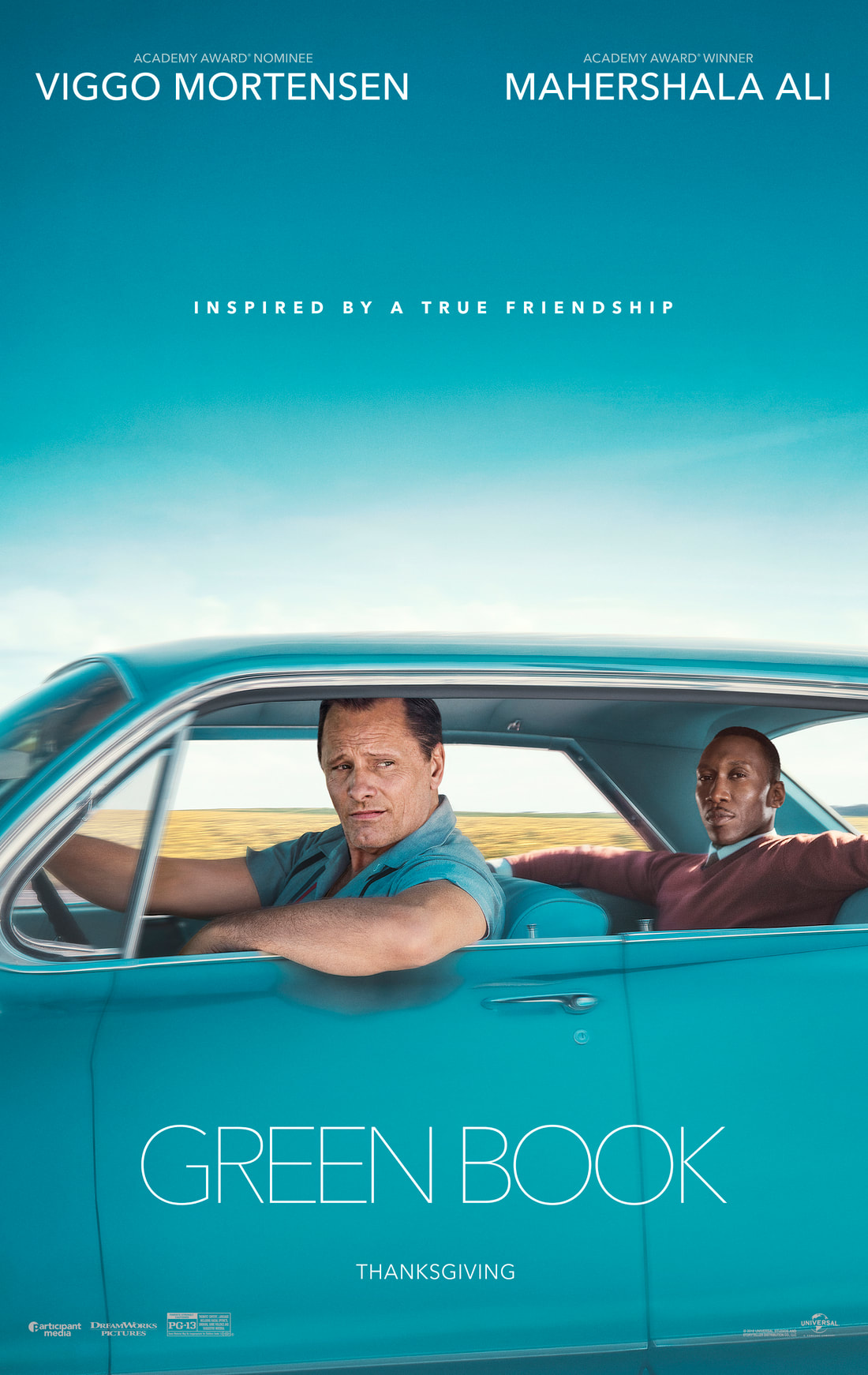
Named after The Negro Motorist's Green Book, a guide to safe and legal hotels and facilities for black travellers in the South of the USA, The Green Book is a brilliant and personable film. Doctor Shirley, a black classical pianist, hires Tony Lip/Vallonga, a bouncer of Italian descent.

Our first introduction to Tony is his reaction to seeing two black plumbers drink juice from glasses in his kitchen; he bins the glasses. His job interview with Doctor Shirley and choice of work over racism is the start of a talented portrayal of an apparently true transformation.

Doctor Don Shirley is a nuanced and amazing character, trying to show openly racist communities the true value of him as a pianist and a black man.
Looking back at this time in history is sobering and painful, but there are some fantastic comedy moments in the seriousness. Shirley's refined, posher life experiences are contrasted with Lip's rough, working class existence. Likewise, Shirley's desire for acceptance and dignity are at odds with Lip's punch-ready background and refusal to budge in his otherness: When Doctor Shirley suggests he uses the easier to pronounce "Valle", Lip tells him that people will call him Vallelonga or nothing at all; while Shirley refuses to stoop to the level that those who abuse him do, Lip is quick to threaten those who are racist to him and eventually to those who are racist to Shirley. This is a time in history where, while Lip is visually white, his Italian name, language and social standing are seen as non-white, "half-n****r" as one police officer says.

While we are confronted with the reality of being a black man in this period, the violence is mostly off camera and the n word only rears its ugly head that one time. A serious topic, this film does present it without being overbearing. Homophobia is also touched on, and in a lovely moment Tony Lip says he's worked at night clubs in New York and that it's nothing new to him. It's over and done with, and the same gender hookup is not treated as an issue or a character defining moment.

Set all across the south of the USA, there are some great ways to show distance and place. Driving scenes feel natural and the amount of scenes featuring two actors in a small car don't feel overused or limited. The use of maps and place name titles give a sense of movement and scale without really making the actual locations the focus. With the other two members of Shirley's trio and Mrs Vallelonga giving outside perspectives and subplots, this is a show of talent in telling the tale of the main pair's journey. With great luck for a true story, their physical journey is the partner to their metaphorical journey to become friends.

Doctor Shirley learns to relax in himself and let himself be 'black' - he goes from uncomfortable socialising with the other black travellers, who are working people, to enjoying a more jazzy jam session in a black bar. More drastic, of course, is Tony Lip's change. From the man who binned two glasses because black men had drank from them, getting to know Doctor Shirley and seeing first hand how the man is treated, he becomes a different man. Relaxed in otherwise all-black spaces, he even ends the film inviting Shirley to his home to meet his still racist family. To think that this is a real story, and that this was a period of two months? The value of this film is amazing. While there are some exposition-heavy, Oscar-bait emotional moments, the whole film is a worthwhile and enjoyable two hours.
0 Comments

The Favourite

24/1/2019

0 Comments

 
Picture

Genre: Drama, Biopic, Historical, Comedy, Romance
Rating: 15
Warnings: Sexual Assault mentions, Mild Gore, Abusive Relationships, some Animal Abuse

A very strange and brilliant film, both tragic and hilarious, horrifying and entertaining. The apparently true story of Queen Anne and her relationships with Lady Sarah Churchill and Abigail Masham, we follow the once-Lady Abigail in her quest to climb back up the class ranks.

The tone of sex is soon established, and the historically accurate language might shock but is entirely in context. The sexual content is overt but not shown; nudity is shown but not during sexual acts, and sexual acts are depicted without showing the act itself. The language too flips between the euphemism we expect of historical drama and the bluntness we do not.
Director Yorgos Lanthimos also directed notably weird films The Killing of the Sacred Deer, The Lobster, and Dogtooth. His style comes through with the title cards, one titled "This Mud Stinks" and another "I Dreamed I Stabbed You In The Eye", and some enchantingly wide-angle lens shots distorting rooms and people. The title cards and credits have an interesting ultimately-justified spacing choice, separating letters to the edges of lines; aesthetically good but unfortunately unreadable.

The story is of contrasts; the soft and kindhearted Abigail and her dark life, Abigail's kindness and the cruelness of those around her, her kindness and her descent into cruelty; the kindness and cruelty of Sarah to both Abigail and Queen Anne; the mix of love and abuse between the couples; the tragedy and rage of Queen Anne; the difference between the cousins Sarah and Abigail in their fight to be the titular favourite of Queen Anne.

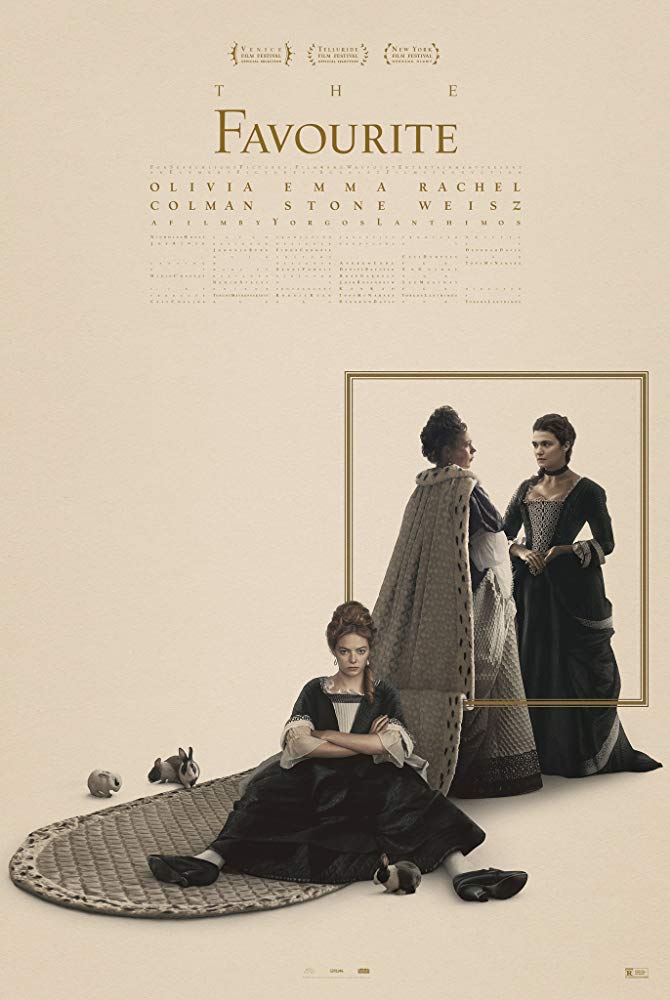
The tragedy of Queen Anne's character is masterfully depicted by Olivia Colman. The pain of her disability and seventeen lost children strongly affect her actions and explain to us, the audience, her otherwise irrational behaviour. Even as she dismisses important issues and hurts people for her own gain, she is a sad figure clearly acting out of pain. Her transferred motherly affection to her rabbits is mistreated by her lovers, and the moment near the end where Abigail cruelly presses on one rabbit with her foot was shocking to me; the callousness Sarah has towards Anne's lost children was an early indicator she was not also wholly on the side of the Queen.

Other animal abuse shown is the repeated motif of Sarah and Abigail shooting birds together; one moment has a bird shot too close and blood spatter on white clothing. While not too gory, there is also a scene of a horse riding accident and the battered face it gives the victim. The sexual content also teeters around the concept of consent, and both the word and concept of rape are thrown wantonly by characters (but not out of story context). The strange title cards are also sudden and the music deliberately jarring; while far from arthouse, it was surprising to see such a weird film in the cinema.

There are long, uncomfortable close ups with no action to highlight long, uncomfortable silences, and the film just ends with a sudden cut after a long build up. The music also ends mid credits, leaving the way for ambient sounds; both the ending and this lack of music makes you feel more is coming, but there is no post credit scene. The story being told is complete but, as life and history, it carries on after the narrative.

With strong, engaging themes, this is either the weirdest film you will enjoy or a pleasant jump into history or romance for your weirdness. Apart from the historical realism enforcing secrecy and shame, the lesbian theme is casual and the female characters take the foreground and strong and successful - the cheating is more shocking than the fact they are both women, and class is more of a factor than gender, with the male characters nonplussed to treat women as intellectually and power-wise as equal players.

This received Oscar nominations for Best Picture, Best Lead Actor (Female), Best Supporting Actor (Female) twice, Best Director, Best Original Screenplay, Best Cinematography, Best Film Editing, Best Production Design and Best Costume Design. It deserves them, as it really is outstanding. The big screen is best for those warping wide angles, so catch it in the cinema while you can.
0 Comments

Bohemian Rhapsody

11/12/2018

0 Comments

 
Picture

Genre: Biopic, Drama
Rating: 12A
Warning: Abusive Relationship

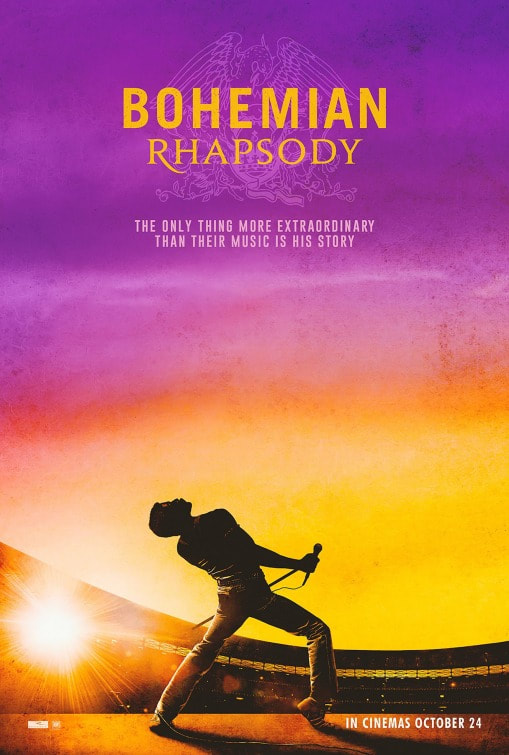
This is the film I never thought they'd be able to make. A bisexual, Parsi, Zoroastrian, Zanzibari rock star who took far too many drugs and had a lot of casual sex while simultaneously being desperate for a fulfilling romantic relationship? Freddie Mercury was such a complex person who did lots of unethical things without malicious intent; to show all the different aspects of him in one film was a huge task, especially without making him look bad or seemingly skipping the negative aspects of his life.

Including his beloved cats without them being a distraction, his AIDs without it being a sad film, and being all about him without undermining the other members of Queen, this really touches on everything and balances so many people's wants.
The film opens with a dramatic getting-ready scene as Mercury and the other band members prepare for the Live Aid performance. Flashing back to just before the band is formed, we slowly travel forwards again, with the Live Aid performance as the grand finale. Especially as a previous incarnation of the film, which was to star Sacha Baron Cohen, was being pushed to include his death and then go on to a second half about the rest of Queen continuing and being successful without him. Baron Cohen quit over this, and the film is far better for not lingering on AIDs and for staying entirely focused on the star himself.

Rami Malek makes an outstanding Freddie Mercury, and is also of non-Black African heritage, as his parents are both Egyptian. He does the exuberance and strong emotions justice, playing a man who is only truly alive in performance, who is emotionally in love with Mary Austin but cannot commit to her sexually and so cannot be with her. He also embodies the role of victim fantastically, with the (apparently non-verified) abusive relationship with Mercury's 'personal manager' Paul Prenter.

This relationship is insidious, manipulative and enraging to watch. Allen Leech as Prenter is a terrifyingly true to life villain, pushing people out of Mercury's life with cold and calculating capability. This may be upsetting or even triggering to people who've been in or just witnessed abusive relationships, especially as this is a real person's life story. It goes on for a while, but in a great scene, Mary shows Freddie the lies and reminds him of the people he has been pushed away from, Paul loses control and threatens Freddie, and Freddie sees everything clearly and has the strength to walk away. The only flaw with this arc, apart from the possibility that it isn't entirely true, is that he never see Prenter suffer for his abusive behaviour, even as a sad viewer of Live Aid. We do see him sell Mercury out, and his use of the slur p*ki caused an audible gasp of disgust in the cinema.

Likewise, the other band members are portrayed well. Ben Hardy as Roger Taylor, Gwilym Lee as Brian May and Joseph Mazzello as John Deacon all look the part and feel real. Taylor and May, both alive and still performing, have clearly been gracious about their portrayal. No-one comes out of this film without looking like a "dickhead", a word Mercury uses to apologise on their reunion. After the 'Queen after Freddie' version of the film, it's fantastic that they agreed to this, as it is truly an amazing biopic.

One scene that was masterful to include was Jim Hutton's meeting with Freddie Mercury. A fictionalised merging of events, he is a member of staff at Mercury's home rather than a fellow nightclub goer. Freddie is portrayed as groping him, and being truly horrified to find that his sexual advance was not wanted and an assault. Freddie Mercury, in his partying days, was by all accounts lecherous and inappropriate, but never meant to cross any lines.

To show him as desensitised to the idea of people who weren't around for sex but still a good person at heart feels important, and this fictional way to meet Hutton gives a more narrative arc for his redemption and gives us more of a feel for Hutton, who isn't given the time to develop otherwise.

Avoiding his death but giving a beginning to it feels respectful, and with even his beloved cats included this film really does include a snapshot of every Freddie Mercury fans know. Most people who listen to Queen will have a basic knowledge of his life, but there will be details here you probably didn't know. It's definitely worth the watch, whether it's an introduction to his life story or nothing new to you.
0 Comments

Powered by Create your own unique website with customizable templates.